
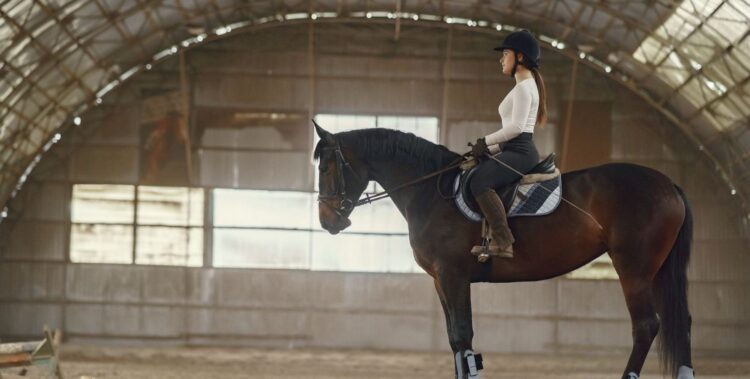
Spotting Micro-Compensations: How Subtle Movement Changes Reveal Early Equine Asymmetry
On September 8, 2026 by lukasWhy Catching Micro-Compensations Matters Before Lameness Appears
Clinical lameness is rarely the first moment a horse experiences a movement problem. Long before a clear head nod, shortened stride, or refusal to work appears, the horse may redistribute weight, alter posture, tighten a muscle group, or change the timing of a footfall. These small adaptations are called micro-compensations. They are not a diagnosis, but they are valuable clues that the horse is finding a task less comfortable, less stable, or more demanding than usual.
Learning to recognize those clues is part of responsible horse-first management. A rider’s impression under saddle remains important, but subjective feel can be influenced by fatigue, expectation, footing, or the horse’s temperament. Repeated visual checks on level ground, particularly during the walk, create a more dependable reference. Early observation does not replace veterinary examination, farriery, saddle assessment, or physiotherapy. It helps those professionals receive better information before a minor adaptation becomes persistent strain, pain, or overt lameness.
The Kinetic Chain and the Physiology of Early Adaptation
A horse does not move as a collection of independent legs. The hoof affects the limb above it, the limb influences the pelvis and thoracolumbar spine, and the back affects how freely the neck, shoulders, and hindquarters can coordinate. When one part becomes uncomfortable or mechanically inefficient, another region often changes its work to maintain balance. A slightly delayed breakover, uneven heel loading, or reduced joint flexion can therefore appear as a shortened stride, a change in pelvic swing, tension through the topline, or resistance in the bridle.
Hoof imbalance is a useful example. Long toes, under-run heels, mediolateral imbalance, or poor heel engagement can alter breakover and shock absorption. The horse may protect the affected limb by placing it differently, spending less time in stance, or transferring load to the opposite side. Over time, the altered forces can be reflected in the dorsal muscles and back posture. This does not mean every hollow, tense back, or uneven step originates in the foot, and it does not mean a radiograph is unnecessary. It means the entire kinetic chain must be considered rather than assigning every back problem to one structure.
- Distal limb changes: altered breakover, uneven landing, reduced loading, or a shorter swing phase.
- Pelvic adaptations: asymmetrical hip height, altered hindlimb tracking, or reduced pelvic rotation.
- Dorsal responses: bracing, a hollow posture, localized muscle tension, or reduced back swing.
- Cranial responses: poll tilt, jaw tension, inconsistent contact, or a head position that changes with direction.
Muscular development deficits and movement avoidance can look similar, but their patterns differ. A young or detrained horse may lack abdominal, gluteal, or thoracic sling strength on both reins and improve gradually with correct conditioning. A horse protecting a painful area may show a sharper side-to-side difference, a sudden deterioration, reluctance to step under, or a compensation that increases with repetition. Watch for changes across several sessions. A single awkward step is information, not proof. Repeated asymmetry, particularly when accompanied by behavioral change or sensitivity, warrants professional assessment.
Reading the Walk as the Master Indicator of Imbalance
The walk is a four-beat gait with no moment of suspension, so each limb must coordinate independently while the body remains balanced. That slower rhythm makes variations in foot placement, stance duration, head movement, and pelvic motion easier to see. At the trot, momentum and diagonal pairing can make a brief asymmetry appear smoother than it really is. A careful walk assessment is therefore not a lesser substitute for a trot-up. It is a distinct source of information and, in many situations, the safest place to begin.
Assess the walk on a firm, level, predictable surface when the horse is relaxed and free from unnecessary rein influence. Look first at the whole pattern rather than chasing one sign. Does the horse travel straight? Does each hind hoof approach the track of the corresponding forehoof? Does one shoulder appear restricted? Does the neck remain centered, or does the head drift to stabilize the body? Regular recordings from the same angle can establish an individual baseline. Research and clinical observation discussed by TrojanTrack’s walk analysis emphasize that these subtle bilateral changes can be useful when monitoring soundness and rehabilitation.
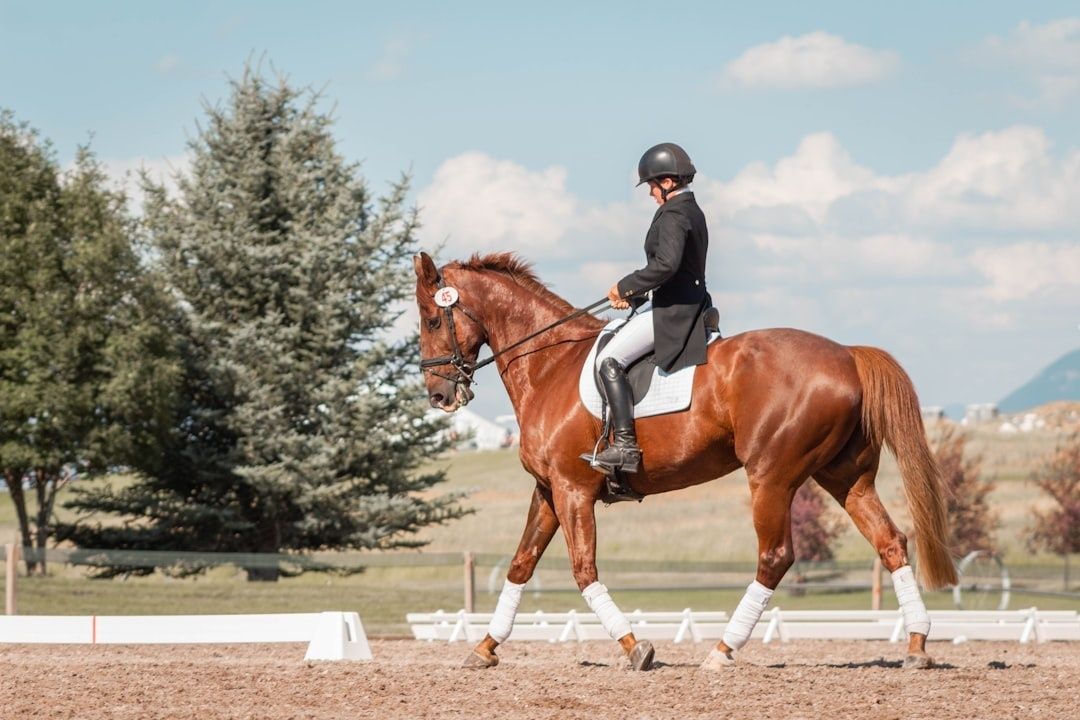
- Observe over-track length. Compare the distance between each hind hoof and the forehoof it follows. A consistently shorter step on one side may indicate discomfort, weakness, or restricted joint movement.
- Track the line of travel. Note lateral drift, a swinging hindquarter, or a forehand that moves away from the line. Repeat the observation in both directions and on a straight line.
- Watch the pelvis. Look for one hip dropping more sharply, a reduced swing on one side, or a pelvic movement that changes when the horse turns.
- Time the head movement. Head and neck motion should be considered alongside the footfalls. An altered nod or a delayed response may reflect uneven loading, but it should never be interpreted in isolation.
- Check shoulder freedom. Compare the length and smoothness of each forelimb’s reach. A guarded shoulder may produce shorter steps, tension at the base of the neck, or a tendency to drift.
Turns provide another layer of information. On a soft arc, the inside limbs must accept different loading demands while the outside limbs travel a wider path. A horse that becomes rigid, falls through a shoulder, speeds up, or changes its head position only on one rein is communicating a difference in balance or comfort. Do not repeatedly circle a horse to make the sign more obvious. A few controlled observations are enough. If the walk deteriorates, the horse becomes distressed, or pain is suspected, stop the session and seek veterinary guidance.
Topline Hollows and Cranial Tilts as Early Warning Signs
A hollow behind the withers is often blamed automatically on trapezius atrophy or saddle fit, but the visual picture is more complex. Conformation, breed, age, body condition, longissimus development, posture, and thoracic sling function all influence the shape of this region. A horse carrying the thorax forward and down may show more pronounced hollows because the muscles supporting the trunk between the forelimbs are not maintaining an efficient lifted posture. When the horse gently lifts the thorax, the hollows may reduce, which suggests a postural component, although it does not rule out pain or tissue loss.
Hollow-back posture can occur with a short-looking topline, a sagging abdomen, a dip behind the saddle, a high head carriage, and reduced hindlimb engagement. The horse may lose rhythm, resist the bit, or feel disconnected through the back. Cranial signs can be equally subtle. A slight poll tilt, uneven jaw activity, chewing on one rein only, a crooked nose, or repeated bit resistance may reflect training tension, tack discomfort, dental concerns, or an attempt to stabilize an uncomfortable body. These signs should be treated as observations rather than diagnoses.
| Normal variation to monitor | Potential compensatory sign | Practical response |
|---|---|---|
| Topline remains similar through relaxed standing and walking | Hollows deepen with a lowered thorax and lessen when the horse lifts its chest | Assess posture, conditioning, saddle fit, and back comfort with qualified professionals |
| Head and neck remain broadly centered | Repeated poll tilt, crooked nose, or jaw tension on one rein | Check teeth, bit, bridle, rider influence, and musculoskeletal comfort |
| Abdomen and back move steadily with the walk | Hollow back, braced topline, or reduced back swing | Reduce demands and investigate pain before adding collection or intensity |
| Stride length is reasonably consistent | Shortened step, lateral drift, or changing foot placement | Repeat on a straight line and arrange veterinary and farrier evaluation if persistent |
A qualified saddle fitter should be involved when posture changes under tack, especially if the horse cringes, braces, avoids lifting the back, or becomes uncomfortable during girthing. Training can support a healthier posture through gradual strengthening, appropriate long-and-low work, poles, and carefully selected gymnastic exercises, but exercises should not be used to push through pain. A horse must first be comfortable enough to recruit the flexor chain and allow the back to swing. Calm contact and a consistent rhythm are more valuable than forcing the head into a particular outline.
Building an Objective Daily Observation Routine
A useful routine is brief, repeatable, and easy to record. Begin before exercise, with the horse standing on level ground and reasonably square without being forced into position. Observe from the front, both sides, and behind. Note hoof balance, limb alignment, swelling, heat, muscle definition, rib and abdominal posture, the height of the hips, and any tendency to rest one limb. Compare the horse with its own previous records, not with an idealized photograph of another horse.
Next, lead the horse in a straight line at a loose, purposeful walk. Film from the front, side, and rear when possible, keeping the camera level and the distance consistent. Then use large, gentle arcs in both directions. Avoid deep or irregular footing during a comparison because the surface itself can create changes in stride and posture. During warm-up, ask only for the movement the horse can offer comfortably. If the walk becomes choppy, the horse refuses to move forward, or a new asymmetry appears, do not try to train it away.
- Record the date, surface, weather, turnout, workload, and whether the horse was shod or recently trimmed.
- Describe observations precisely, such as “shorter right hind step on straight line,” rather than writing “looks lame.”
- Note whether a sign appears at rest, during the first minutes of walking, after exercise, or only on a particular rein.
- Document behavior, including girthing reaction, mounting reluctance, bucking, ear position, or unusual irritability.
- Share videos and records with the veterinarian, farrier, saddle fitter, and physiotherapist so each professional sees the same pattern.
Farriery timing matters when interpreting a change. A horse may move differently after trimming or shoeing while adapting, but a persistent deterioration, new reluctance, or worsening asymmetry deserves attention. Similarly, a change after a saddle adjustment may reflect improved freedom or may expose a separate weakness that had been masked. The goal is not to label the cause from the yard. The goal is to identify a repeatable change early, reduce unnecessary strain, and provide professionals with clear evidence for a coordinated examination.
Sharpen Your Eye and Protect Your Horse for the Long Haul
Micro-compensations are small, but they are not trivial. A repeated change in foot placement can increase load elsewhere; a braced topline can limit back movement; a slight cranial tilt can reveal an attempt to maintain balance or avoid discomfort. Systematic observation of the walk, dorsal posture, pelvis, shoulders, and head position gives you a practical way to notice these developments before they become obvious lameness. It also supports better decisions about workload, footing, tack, trimming, and recovery.
Use visual evidence to guide caution, not to replace diagnosis. When a pattern persists, worsens, or appears with pain behavior, arrange a veterinary assessment and involve the appropriate farrier, saddle fitter, physiotherapist, or rehabilitation professional. Clear records make collaboration more efficient, while calm handling protects trust during the investigation. Soundness is built through many small adjustments with lasting impact: appropriate management, balanced movement, patient conditioning, and the discipline to listen when the horse’s body begins speaking quietly.